
Mia Cara Vineyard, Creek Shores
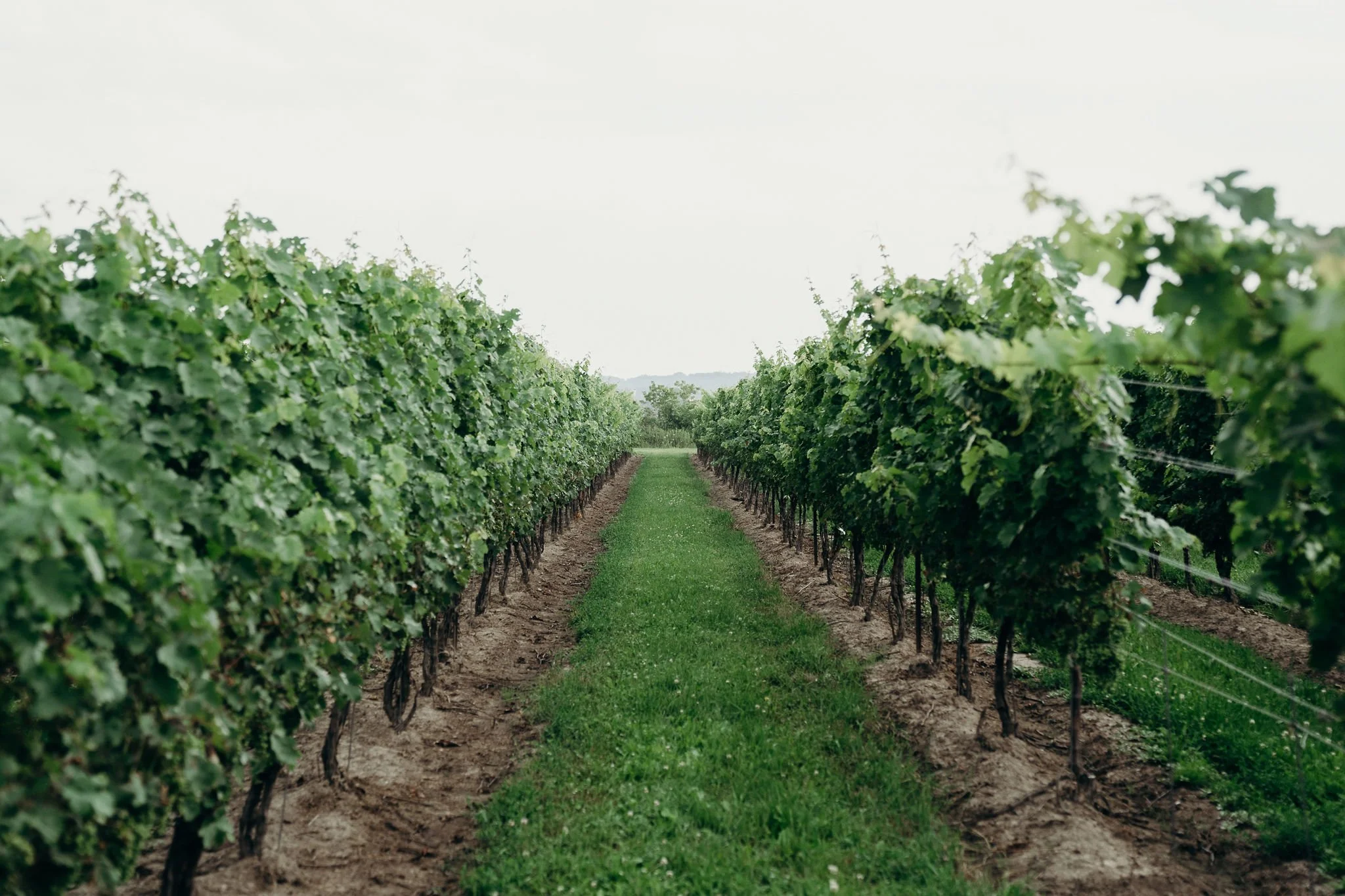
Vineyard Row. Photo by Joanna Grace Photography
10 acres, 9 varietals.
As a boutique winery in Ontario, we are dedicated to crafting exceptional, small-batch wines that reflect the character of our vineyard. With 10 acres of vineyard, we take a thoughtful, hands-on approach to winemaking, employing sustainable viticulture practices with a focus on quality, balance, and the natural expression of our fruit.
Our vineyard is located in the Creek Shores sub-appellation, a unique region shaped by its proximity to Lake Ontario, Twenty Mile Creek, and Jordan Harbour. The area’s diverse soil structures and distinctive mesoclimate create ideal conditions for producing wines with a true sense of place.
Through careful vineyard practices and thoughtfully crafted wine styles, we work to capture the character of our site and bring out the full potential of every grape we grow.
Across our 10 acres of vineyard, we grow a diverse selection of nine grape varieties: Cabernet Sauvignon, Cabernet Franc, Gamay Noir, Merlot, Pinot Gris, Riesling, Muscat, Gewürztraminer, and Viognier.
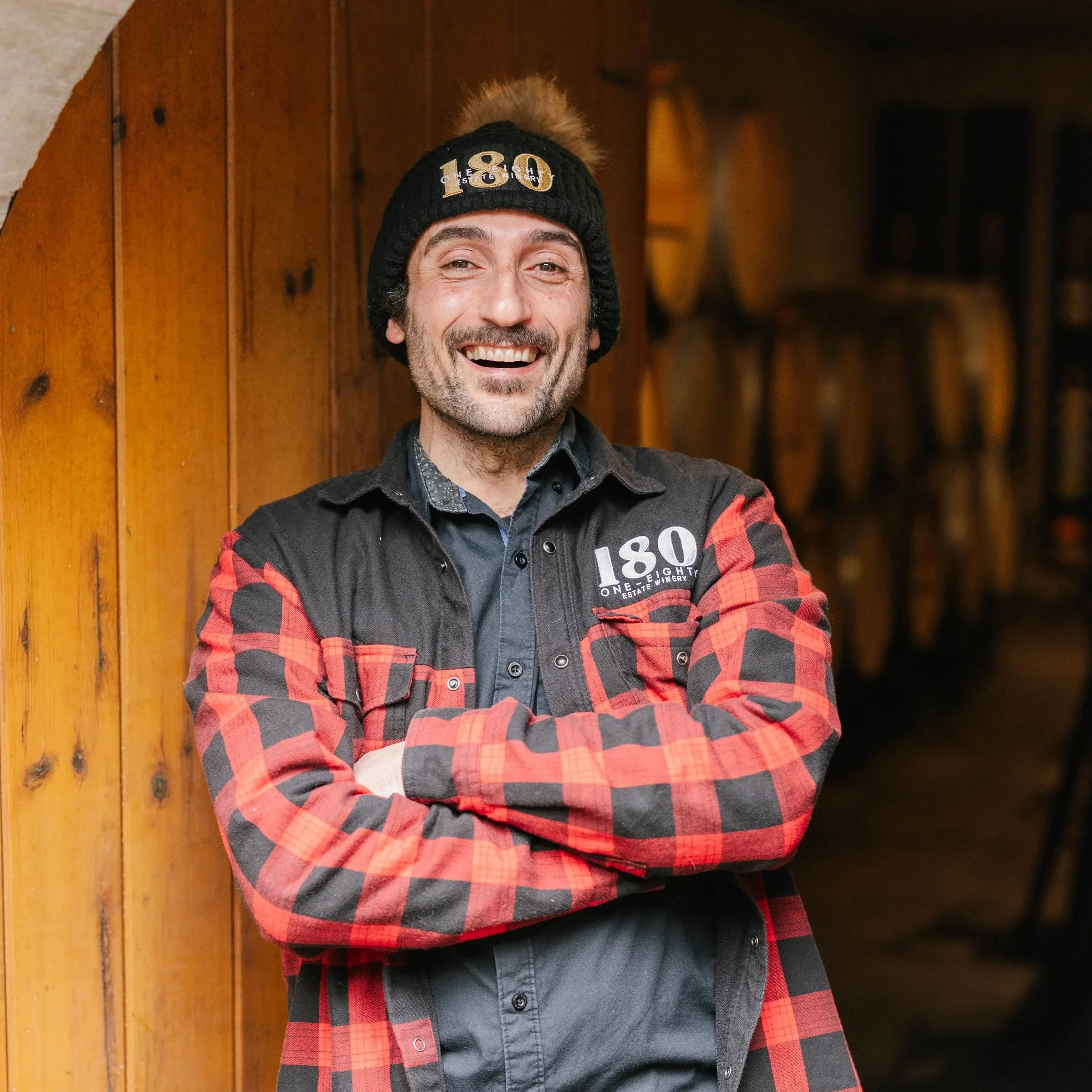
Winemaker Ramsey Khairallah.
Winemaking.
Our winemaking team is led by Head Winemaker Ramsey Khairallah, who brings more than 20 years of experience in the wine industry. A graduate of Niagara College’s Winery and Vineyard Technician program, where he finished at the top of his class, Ramsey also holds an Honours BSc in Oenology and Viticulture from Brock University.
His international experience spans wineries across Australia, New Zealand, France, and the United States, giving him a diverse perspective on winemaking and a deep appreciation for the unique character of different wine regions.
Ramsey has a passion for creating exceptional and distinctive wines, drawing on a variety of winemaking techniques, including the Appassimento and Ripasso methods. He works closely with our Viticulturist and Vineyard Manager, Roger Vail, to maintain the health of our vineyard and ensure each of our nine grape varieties reaches its full potential.
Together, their expertise and collaboration allow us to craft wines that reflect the character of our vineyard while showcasing the quality of the fruit we grow.
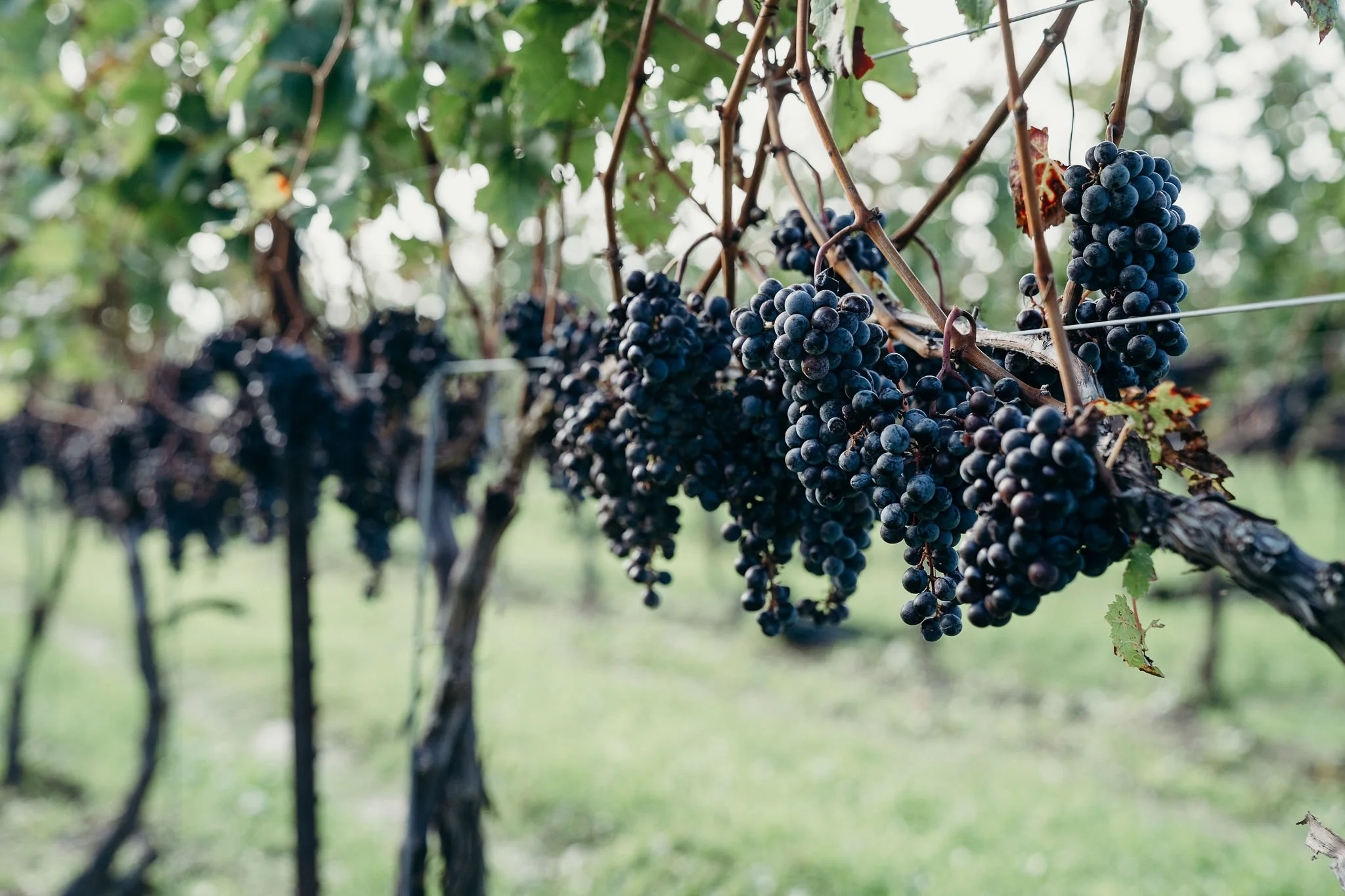
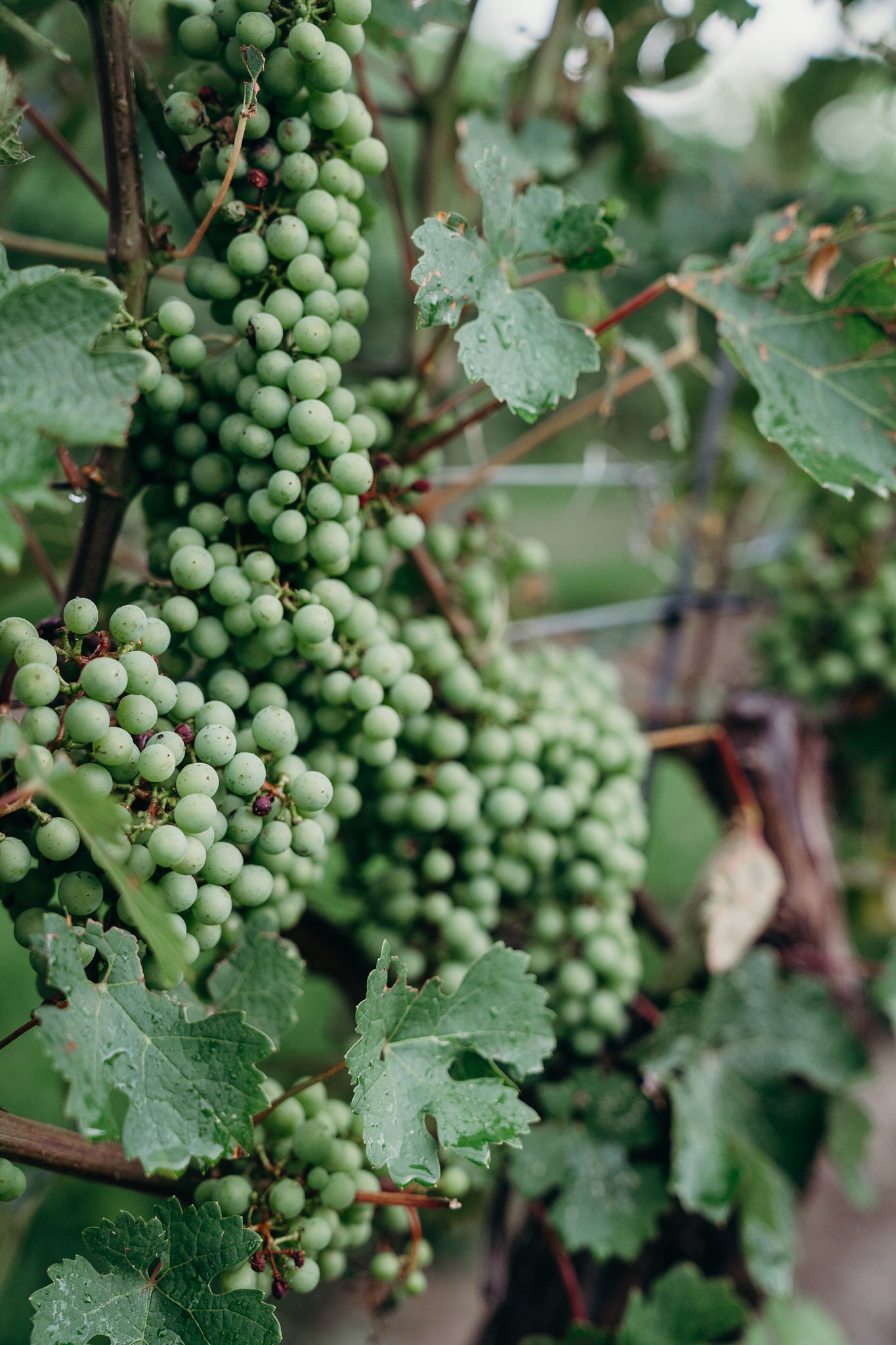
Cabernet Sauvignon Grapes Growing. Photo by Joanna Grace Photography.
Sustainable Vineyard Practices.
Sustainability is an important part of how we care for our vineyard and the land around us. From conserving water to enriching our soil and reducing our environmental impact, we use thoughtful, sustainable practices throughout the growing and winemaking process.
Water Conservation
We divert wastewater from our wine production and grape cultivation through a wetland biofilter, where native plants and beneficial microbes naturally help cleanse the water. Once treated, the water is released back into the vineyard, helping us conserve and responsibly reuse this valuable resource.
Waste Reduction
Rather than discarding pomace—the grape skins, seeds, and stems left behind during processing—we return it to the vineyard. Our winemaking team spreads the pomace throughout the vineyard, returning organic matter and nutrients to the soil and helping enhance its fertility.
Green Energy
Solar panels installed on our barn harness energy from the sun, providing us with a renewable source of power and helping reduce our reliance on conventional energy sources.
Cover Crops
We cultivate cover crops between vineyard rows to help prevent soil erosion, improve soil health and fertility, and reduce our reliance on synthetic fertilizers. These crops play an important role in maintaining a healthy and resilient vineyard ecosystem.
Integrated Pest Management
Our regional climate brings humid conditions during the growing season, creating an environment where fungal diseases can develop and impact fruit quality, yields, and ultimately the character of our wines.
To help manage these risks, our vineyard team practices Integrated Pest Management (IPM), taking a proactive and data-driven approach that includes:
Daily monitoring for signs of pests and disease
Canopy management, including leaf thinning, to improve airflow and sunlight penetration
Vineyard floor cultivation to support healthy growing conditions
Weather forecasting to anticipate potential disease threats
Working with a scouting service to monitor regional disease development
By closely monitoring vineyard conditions and using this information to determine the most appropriate response, our team can address potential risks early and minimize the need for spraying. This proactive approach allows us to protect the health of our vines and fruit while being thoughtful about our impact on the environment.